The Reason for Pain

living-proof

Decades ago when I was in my early 20s my ex-husband – not my soul-mate husband who died recently,  but a good and brilliant man nonetheless – gave me this answer in response to my demand to understand “why animals in the wild have so much pain when they’re caught by predators for food.”

“Because,” he quietly answered, “without the pain they wouldn’t try to escape” and the prey species would cease to exist, the predators would have no food source, and they would perish as well.

I’ve gnawed on that concept ever since.

Why do we have emotional pain?  Why do we have physical pain?  Why do children die of cancer?  Why do people do horrible things to others?  Why is life so difficult?

The answer I kept coming back to was the simple one my ex-husband gave me so many years ago.  Because without pain we would become complacent and allow all things to continue as they are.  Nothing would change.  Everything would change.  Everything would end.

We would not try to become better people, learning how to spend more energy on loving others than hurting them.  We would not try search for the causes of our physical pain, which is only a symptom of some underlying disease process.

We would not hunt desperately for a cure for cancer.  We would not be destroyed when a loved one dies.

Pain is there for a reason.  Without it, nothing will ever change, except to get worse.  Without pain, we as a species would die out – or more likely, rapidly kill ourselves off. And we probably would have done so long before now.

This has been the very simple basis for everything I’ve done and been for the past 40 years of my adult life.  We must strive to be better than we are, to help others and by doing so, to help ourselves.  We must work to eliminate all forms of pain, which includes the hard task & responsibility of understanding and managing our own.

We must be gentle with others as they may not be gentle with themselves; in turn, we must do the same for ourselves.

I am by no means the poster child of goodness and empathy.  I am often impatient and so busy in my own head that I can forget that others need me.

When I am hurt or scared, I can lash out unexpectedly, and not very nicely.  I usually recognize the impact that my behaviors and insecurities have on others, but am not always able to fix it.  However, I do try.  And when I love you… oh, I love so fiercely.

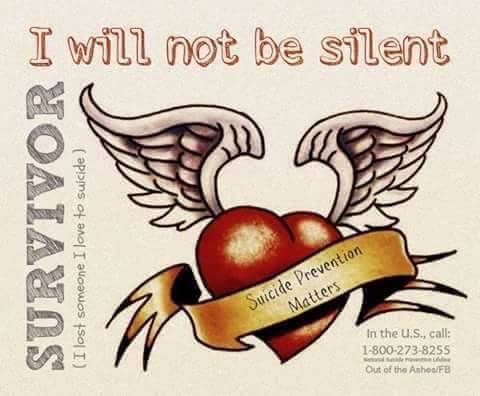
My world has been shattered by the suicide of the man I loved beyond words.  My little theory works still, in that the horrendous pain I (and all survivors) feel is a necessary pain, to insure that good people push harder to find the reasons and cures for the kind of mind-numbing, devastating psychic and physical wounds that cause people to kill themselves, leaving the rest of us behind bewildered and destroyed.

Despite my theory, despite working on The Warrior Project, despite knowing that I must go on because in time I will care again… most of the time lately I find I really don’t much give a damn.

******************

In memory of my beloved husband John Kelly Snyder… 20 Sept 1956 – 21 Oct 2016.

The Warrior Project is a warm, welcoming drop-in center for those living with extreme emotional and/or physical pain coupled with hopelessness, and a resource for families and friends fearing for the life of, or grieving the loss of, the person they love so much.

My Johnny was a true warrior, fighting demons no one else could see.  I thought he was the strongest man in the world, and perhaps he was, but tragically, the demons got the better of him.

The name of this project is in no way intended to be reflective of, or piggy back off, Wounded Warriors which serves those wounded after September 11, 20o1.  Like too many others, John was a warrior long before then.

Fair winds and following seas, Husband.

Posted in Grief, Suicide | Tagged , , , , , , , , | Leave a comment

Warrior Project – Initial Planning Meeting

hearts-like-wildflowers

For those interested in helping with The Warrior Project, I’d like to pull together a meeting this week if possible. We’ll meet in the space I’m setting up for this program, at 189 Main Street in Lewiston (for now, enter through the Heritage Collectibles front door).

My schedule is horrid (in addition to my job and the shops, I have a board meeting and several doctor appointments coming up).

Here’s what I have available. Please comment on here, message me, text me, whatever if any of these times work for you.

Tuesday, November 29 – between 10:00-2:00 (the shop will be open, so I’ll be a bit distracted)
Wednesday, November 30 – 12:30-1:30, or 7:00 pm+
Friday, December 02 – 9:00-1:00 (the shop will be open beginning at 10:00) or 7:00 pm +
Saturday, December 03 – 8:00 am – 10:00 am (the shop will be closed), or after 10:00 when the shop is open.

If none of these work, I’ll post times for the following week,

Thank you,
Linda


*********************

as-long-as-i-live

In memory of my beloved husband John Kelly Snyder… 20 Sept 1956 – 21 Oct 2016.

The Warrior Project is a warm, welcoming drop-in center for those living with extreme emotional and/or physical pain coupled with hopelessness, and a resource for families and friends fearing for the life of, or grieving the loss of, the person they love so much.

My Johnny was a true warrior, fighting demons no one else could see.  I thought he was the strongest man in the world, and perhaps he was, but tragically, the demons got the better of him.

The name of this project is in no way intended to be reflective of, or piggy back off, Wounded Warriors which serves those wounded after September 11, 20o1.  Like too many others, John was a warrior long before then.

Fair winds and following seas, Husband.
 

Posted in Warrior Project | Tagged , , , , , , , , | Leave a comment

He Did Not Ask My Permission

depression-chose-to-stay

Someone just posted the following on one of the suicide loss groups on Facebook:

“We need to find a way for it to be ok when a person feels they have to ‘opt out’ of their life. We need to find a way to respect and honour their choice – even when we are filled with pain. I’m not saying it’s easy. It’s not.”

My response:

I don’t agree. My husband and I always talked about every major decision in our lives. We talked about the minor ones as well.

HE DID NOT ASK ME IF IT WOULD BE OKAY IF HE KILLED HIMSELF.

This was a major decision, a huge f*ing decision, that affected both of us, and he didn’t talk to me about it.

He did not tell me how bad it was for him. I knew he was hurting – and I was doing what I could to help (including changing my work schedule to be home in the evenings when he needed me, taking on more of his responsibilities because he seemed so overwhelmed, etc), but I had no idea it was as bad as it was. He refused to get medical help for his chronic pain (I did not know how bad it was), or counseling support for his sense of shame and failure (I did not know how bad that was, either), saying that he just needed me around more.

I could not be with him 24/7, although if I’d known more about what was going on with him, I would have tried. He put a huge amount of responsibility on me and our intense love for one another, without telling me the parameters of what I was dealing with.

I know he thought that, in addition to ending his own misery, he was making my life better by killing himself. He was self-destructive and hurting far worse than I realized.

I will honor him and his memory until I draw my own last breath, and I have an entire list of how I will make that happen. But I will not honor a decision that he made that involved the rest of my life, and in a fashion that I absolutely, under no circumstances, would have chosen at this point in time.

Despite the intensity of this post, I am not angry with him… in this instance, saying or believing I was angry would be just a defense mechanism, a way of dealing with the indescribably raw emotions I’m feeling.  I am hurt beyond words, lost, lonely, devastated and completely destroyed… I know he thought he was doing the right thing for himself and for me. But he had other options, and he knew that I loved him so fiercely I would have made them happen if he’d told me how bad it was… I’d already proved that in other areas.

He did not leave behind anything telling me he loved me, other than all my memories. Nor did he leave behind any kind of suicide note or anything that suggested he was considering it.

He did, however, leave behind clues to his extreme pain, shame & self-destructiveness, clues he had covered up far too well when he was alive, but which he knew I’d find. I know he did it believing I’d see them and decide he was a bad person, that his suicide was justified, and that I was better off to be rid of him… But those clues just show how very sad and desperate he was, and how he didn’t want me to know how much he hurt.

No, I will not honor his choice to kill himself without at least having asked me if it was okay. And of course, I would have said No.

*********************

as-long-as-i-live

In memory of my beloved husband John Kelly Snyder… 20 Sept 1956 – 21 Oct 2016.

The Warrior Project is a warm, welcoming drop-in center for those living with extreme emotional and/or physical pain coupled with hopelessness, and a resource for families and friends fearing for the life of, or grieving the loss of, the person they love so much.

My Johnny was a true warrior, fighting demons no one else could see.  I thought he was the strongest man in the world, and perhaps he was, but tragically, the demons got the better of him.

The name of this project is in no way intended to be reflective of, or piggy back off, Wounded Warriors which serves those wounded after September 11, 20o1.  Like too many others, John was a warrior long before then.

Fair winds and following seas, Husband.

Posted in Grief, Suicide | Tagged , , , , , , , , , | Leave a comment

Unbearable Loneliness

depression-is-like-drowning
I have never been lonely in my life – until now.

I had never understood loneliness or how it can eat people up.  I’ve always been so busy with work, dozens of projects in process, and a constant pile of thoughts and ideas in my head, that any downtime was spent “getting stuff done”.

When life hit hard (and it did, too often), I used those projects and that busy-ness to stay focused on the future, and to get through the tough days.

When life was good, the ingrained habit of always being busy would continue.

I was perfectly happy working on some project in bed, while my husband was sprawled out, reading a book from which he’d quote passages to me, while the dogs were sleeping next to us, and some oldies television show was playing.  It felt good; it felt calm.  It felt right.

But now he’s gone, and I feel so alone, so lonely, I can hardly bear it.

He’s not at the foot of the bed as I write this.  He’s not in his man-cave, eagerly researching whatever piece of military history or science has suddenly taken his fancy.  He’s not out on the back deck, with one foot up on the long built-in bench, smoking a cigarette and pondering mysteries and other ideas.  He’s not endlessly throwing a ball to our Millie.  He’s … not.  He’s not here.

I think of all the people out in the world, those who have been so supportive and who have offered to do anything I need to help me get through this time.  People who have invited me to their homes, who have offered to drive me places or just spend time with me.

And I appreciate them.

But they are not my husband.  They are not my Johnny.

My house is big.  At 3,000 square feet it has loads of room and is quite a lovely house, although there’s a fair amount of maintenance needed that we never got done.  (I didn’t understand before why John didn’t complete a lot of projects he could have/should have done, although I rarely said anything to him about them. Now I know that he didn’t have the energy, and worse, he didn’t think they mattered because he might not be around to complete them.)

It’s big and it’s full of our stuff.  My stuff.  My husband’s stuff.  He is everywhere I look.

I spend all my time in our bedroom.

Sometimes I watch television, but it doesn’t interest me.  I can’t really read, although I’m trying to get through some kids’ books that my high school best friend gave me – she had known John longer than I did and these were books she had introduced him to when they were kids.

I call on-line counselors.  I search Facebook groups for insights and support.  I write blogs.

I go to work – as a social worker – and come home.  I try to have an interest in our antiques shop and our used book store, but he’s everywhere in those shops, and after a few hours, the pain and anxiety build up and I have to leave.

I try to work on The Warrior Project but now that I have most of the background done and it’s time to make it happen, I’m stuck.  I know what I need to do next.  I just can’t seem to do it.

Throughout everything is this horrible, pervasive feeling of loneliness.

We joked more than once that we would be perfectly happy living on an island somewhere with no other people around, just the two of us.  It wasn’t really a joke; John liked being around other people more than I need to, but he was too sensitive to the particular issues each person would carry.

If a customer came into the shop and seemed irritable for any reason, it wounded him. He would take it on as a slam against him personally.  He wanted to be kind; he wanted to be helpful; he wanted to make people happy.  And those who brought their own pain to the table were hard for him to handle, although they probably never knew it.

Under it all, he was lonely.  He told me this, but in the stoic, gruff man way he had.  I didn’t realize how very lonely, because I didn’t really understand the concept.  I did what I could to be there more for him, but my social work job demanded that I be out evenings… and those were the times when he was most alone.

He once forcefully told me I had to change my schedule and be home evenings… my response was that this was unreasonable; I’d do what I could but there was no way to meet the job’s billable requirements and be home every evening.  I did in fact tell my supervisor at work that I needed to be home more and made some adjustments to my evening schedule.  And I began applying for daytime jobs, but with no luck there.

When months later, he said it again, that he was lonely and needed me home, I immediately changed my schedule so I was home every night.

At that point, it didn’t matter what the job needed from me.  My husband needed me more.

It seemed to be working, at least for a while.  He was eating more, and he seemed happier. We spent more time together.  We made love more.

But it didn’t last long. I guess it was a case of too little, far too late.  Within three weeks, my husband – the man I loved more than anyone else in this world except my daughter – was dead of suicide.

And now I’m living with this unbearable sense of loneliness.

If this is how he felt when I wasn’t physically with him, if he was so sad and depressed, and in so much chronic bodily pain that he needed me right there to feel my love and support, and to keep him from making desperate choices, then I am destroyed thinking of how I failed him.

Logically, I know – and several therapists have pointed out – that I could not be with him all the time.  The sheer force of my will and my love could not have sucked that loneliness out of him, no matter how I wish it could have.

He put too much faith and responsibility on me and our love, and not enough in the medical field which might have helped him.

Because he didn’t trust the medical professionals, he refused the help he could have received.

And now I’m living without him, and it’s so very sad and wrong and unfair.  And I’m so very lonely.


loneliness-brooding-wings-copy

In memory of my beloved husband John Kelly Snyder… 20 Sept 1956 – 21 Oct 2016.

The Warrior Project is a warm, welcoming drop-in center for those living with extreme emotional and/or physical pain coupled with hopelessness, and a resource for families and friends fearing for the life of, or grieving the loss of, the person they love so much.

My Johnny was a true warrior, fighting demons no one else could see.  I thought he was the strongest man in the world, and perhaps he was, but tragically, the demons got the better of him.

The name of this project is in no way intended to be reflective of, or piggy back off, Wounded Warriors which serves those wounded after September 11, 20o1.  Like too many others, John was a warrior long before then.

Fair winds and following seas, Husband.

Posted in Grief, Loneliness | Tagged , , , , | 2 Comments

16 Suicide Warning Signs & Behaviors To Recognize

16 Suicide Warning Signs & Behaviors To Recognize

If you or someone you know is depressed, there is a chance that suicidal thoughts may accompany their depression. If left untreated, depression is known to be one of the top causes of suicide. In up to 90% of suicides, an underlying mental illness – usually depression was the most influential factor. Although untreated mental health issues can be the biggest influence on whether someone makes a decision to take their life, there are other suicide risk factors such as: being unemployed, financial troubles, death of a loved one, relationship problems, etc.

These other factors and life circumstances can have a huge impact on whether someone decides to follow through with the act. In most cases, there is some sort of treatment available that will help improve a person’s situation. Individuals that are suicidal do not usually really want to die, rather they see dying as the only solution to the pain that they are currently facing. Typically when a person’s ability to cope with their pain and/or their pain is reduced, they no longer feel suicidal.

For individuals that are concerned with the wellbeing of another person who is suicidal, it is important to understand suicide warning signs – or behaviors that could signal that the person is prepared to follow through with the act. If you recognize any of these warning signs, be sure to take the person seriously and get help. Get the person in for therapy and/or if they pose an immediate threat to their own life, call the police.

Suicide Warning Signs: List Of Possibilities

Below are a list of common warning signs to look for when a person is suicidal. Keep in mind that not every suicidal person will exhibit all of these signs. Additionally some people may be suicidal and not exhibit any of these signs. However, usually those who are close to the suicidal person should be able to pick up on a few signs.

1. Talking about suicide: Perhaps the biggest and most obvious warning sign is when a person talks about suicide. They may casually bring up the topic, but usually the individual may talk about wanting to take their own life. The problem with this is that many people do not take this talk very seriously or think it’s just a phase that will eventually pass. If someone brings up suicide and/or suggests that they may take their own life, it must be taken very seriously.

2. Untreated depression: If a person is clinically depressed, they may be prone to crying spells, have difficulty getting out of bed, problems sleeping and eating, and feel hopeless about their situation. When a person’s depression is untreated, they are in a state of pain and basically shut down. Their thinking becomes clouded by the depression that they are experiencing and they may feel as though life is pointless due to the way that they feel.

3. Giving away possessions: One of the most obvious warning signs is when a depressed individual gives away all of their possessions. Uneducated people may be confused as to why a person would give away their property without reason. Usually family and/or close friends will take note of a person giving all of their valuable property away. When they confront the person, they may say that they won’t need it anymore, etc. Giving things away can be one of the key signs that a person is planning on following through with taking their life.

4. Saying “goodbye”: In many cases, a person will visit family and/or other close friends prior to following through with the act to say “goodbye.” They want to tie up loose ends and let the people that are close to them know that they care about them a lot. Sometimes it may not seem like a “goodbye,” rather it may seem as though the person is spending some time with everyone that is important to them. Watch out for this type of behavior – the person will generally pursue most immediate family and friends for some closure. Keep in mind that saying “goodbye” could also be over the phone or via text message.

5. Suicide notes: An extremely obvious warning sign is that of a suicide note. In this note a person may write about a variety of topics including: how much they will miss their family, that they love their friends, the pain that they are dealing with, and in some cases, why they must end their life. If you find a suicide note, be sure to take it very seriously because the person may follow through with the act. Get the person some sort of help and if they are unwilling, you may need to call 911 with the note in hand.

6. Alcohol & drugs: In many cases when a person is suicidal, they may turn to abusing alcohol or other drugs as a way to escape these feelings. Although they may find temporary relief from their pain as a result of their substance use, in many cases alcohol and drugs make the situation worse. Many times the person ends up increasingly depressed following the usage of substances. It should also be noted that when a person is serious about following through with the act of suicide, they may drink, pop pills, etc. so that they can build up the courage follow through with it. Be on the lookout for the person using alcohol, drugs, and/or both more frequently to the point of abuse – this is a warning sign.

7. Change to “calm” demeanor: Often leading up to a suicide, a person will exhibit a change in mood from being very sad to a general calmness and/or in some cases, appearing happy. If you notice that a person is all of a sudden very calm and was previously extremely depressed, this may be a red flag. The calmness and/or happier appearance is generally due the person being convinced that they are going to follow through with the act.

8. Reckless behavior: When a person has decided to take their own life, they may engage in more reckless behavior and decision making. For example, they may speed while driving, drive through red lights, try illicit drugs, have unprotected sex, shoplifting, etc. This reckless behavior is usually due to the person not caring about their life anymore. In some cases, this behavior is easily noticed by others close to the individual who is suicidal. If you notice someone acting reckless, especially someone who was previously more reserved, it may be warning sign.

9. Researching suicide methods: You may notice on the person’s internet browser history that they have been researching painless suicide methods and/or how to kill themselves. If you see this in the person’s search history, take it very seriously and assume that they are going to follow through with the act. In this case, the person needs some sort of immediate help and intervention to help them get out of the pain that they are in. Help guide the person by getting them in for help and if they refuse, call the police.

10. Buying suicide materials: If you catch someone who is severely depressed and/or suicidal purchasing materials to help them follow through with the act, this needs to be addressed. For example, the person may be visiting pawn shops or auctions looking to buy a gun. They may also be buying things like rope, pills, knives, razors, etc. online or at general stores. Purchasing materials shows that the person is ready to go through with the act, and now has the means to carry the act out.

11. Creating a Will: A person who has plans of suicide may take the steps to create a will so that their loved ones get their possessions when they pass. Additionally if a person already has a will, they may make some last-minute revisions to it before following through with the act. If you notice any preoccupation with the creation of a will accompanied by the person giving away prized possessions, this could be a warning sign.

12. Social withdrawal or isolation: Another very common warning sign leading up to suicide is that of social withdrawal. Many people isolate themselves from friends, colleagues, and other family members. This increased social withdrawal can actually make the person more depressed and suicidal than they already are. Prior to committing suicide, a person may gradually withdraw from friendships, social commitments, and extracurricular or work related functions. If you notice someone – (especially someone who was previously very involved) – withdrawing from these functions, this could be another indication that the person is suicidal.

13. Talking about being a burden: If you notice someone talking about being a “burden” to others including friends, family, etc. – this could indicate that they feel as if they aren’t wanted. Feelings of being a burden may make the person feel like an outcast and may contribute to depression and/or suicidal ideation. When someone frequently says that they are a burden and/or all that they do is cause problems for others, this can be a warning sign.

14. Feeling hopeless: When someone says that they are in a hopeless situation or that they have no hope for their future, this could suggest suicide as well. Besides feeling hopeless to change their situation, the person may describe themselves as being “helpless” and/or “worthless.” Anytime someone lacks hope to improve their current situation or future and thinks that they are worthless, this signifies that they need some sort of help. If a person feels this way, especially for a long period of time, they may end up turning to suicide.

15. Preoccupation with death: Individuals who are preoccupied with death and/or think about it often may be considering suicide. You may notice a person openly talking about death, researching it, and considering the afterlife. Although death can be a topic of normal conversation, the preoccupation with it is what could suggest that a person may be suicidal.

16. Previous suicide attempt: It is estimated that between 20% and 50% of people who take their own life had previously attempted suicide. If someone you know has previously attempted suicide and is acting suicidal, take it very seriously. Statistics show that if a person has tried it once, they are more likely to try it again in the future. If you suspect that something may be in the works, talk to the person and listen to what’s on their mind.

Other warning signs of suicide include:

  • Commentary such as “I want to die” – If you hear anyone say things like “I wish I was never born,” “I wish I was dead,” or “I don’t want to be here anymore,” they are probably thinking of suicide. Keep this in mind and either help the person yourself or get them some sort of help.
  • Rage / revenge seeking – In some cases a person may be motivated by rage or threaten to take their life as some sort of revenge. Although most cases of suicide involve depression, there are cases involving anger and rage.
  • Losing interest in life – People who lose interest in life and/or previously important things are likely already going through depression. If the person is not able to regain some sort of interest, they may be thinking of suicide.

What should you do if you think someone is suicidal?

Get help. The best thing you can do for someone who is suicidal is to get them some sort of help. You could get them to agree to go in for therapy and/or some sort of psychiatric intervention. If the person refuses to change and you suspect that they may take their own life, do not hesitate to call the police. Many people are afraid to call the police when a person is suicidal, yet it can be the exact intervention needed to turn a person’s situation around.

Prior to calling the police though, talk to the person by speaking up. Don’t argue with the person, just be empathetic to their situation and promise that you’re going to get some sort of help. Once you ask a few questions about their situation, determine the degree to which you think the person will carry out the act. Ask them whether they have a plan, whether they have materials, if they know when they would do it, or if they still have the intention.

If the person says that they have a plan and materials, you may want to recruit extra help. If you are able to remove potentially lethal objects from the person’s possession, take this step. Continue to offer the person help and support and encourage them to seek treatment. Also come up with a safety plan or contract to further minimize their risk of self-harm. It takes a lot of courage to intervene when someone is suicidal, but at the end of the day, you may save someone’s life.

***********************

In memory of my beloved husband John Kelly Snyder… 20 Sept 1956 – 21 Oct 2016.

The Warrior Project is a warm, welcoming drop-in center for those living with extreme emotional and/or physical pain coupled with hopelessness, and a resource for families and friends fearing for the life of, or grieving the loss of, the person they love so much.

My Johnny was a true warrior, fighting demons no one else could see.  I thought he was the strongest man in the world, and perhaps he was, but tragically, the demons got the better of him.

The name of this project is in no way intended to be reflective of, or piggy back off, Wounded Warriors which serves those wounded after September 11, 20o1.  Like too many others, John was a warrior long before then.

Fair winds and following seas, Husband.

Posted in Suicide | Tagged , , , , , , , , , , | Leave a comment

From HuffPost: No One Tells You This About Loss, So I Will

THE BLOG

No One Tells You This About Loss, So I Will

Huffington Post
06/01/2016 08:28 am ET
| Updated Jun 03, 2016

No one tells you this.

So I will.

No one tells you that you may want to die. No one tells you that you may lie in bed and pray for your heart to stop. That even your most cherished and beloved children and husband may not be able to rouse you from the depths of your sorrow. That even the breathtaking sunrises and majestic shooting stars above won’t give you pause.

No one tells you this.

I’m not talking about depression. Or suicide. Or hopelessness. I’m talking about how you may feel if a person you love so deeply, a person who knew and stood by you from birth — and was supposed to be with you until death — dies. All of a sudden. With no warning. Way too young. Frighteningly full of life. And then in an instant, they are gone.

My brother Wyatt died suddenly at age 42 of an aneurysm almost a year ago. We were closer than most siblings. Our dad died when we were one and three years old and, bonded by this early trauma, we were each other’s keepers. He was my anchor, my last stop, my wingman for life. My cradle to grave.

2016-05-26-1464301084-5965873-2.jpg

When he died, I lost all connection to planet earth. A window opened between dimensions and I climbed right in.

‘Take me with you,’ I repeated. Over and over and over. It was disorienting and at times completely engulfed me. But it was the only place I wanted to or could be. For months I would drift in and out of this state.

And when you articulate this to friends and family, when you try to give words to these feelings, every alarm rings. Everyone starts to worry. Our culture has nowhere to put these dark feelings and sorrow.

No one tells you this. Not in our American culture anyways.

So now that I’ve made it to the other side, I will.

Each individual mourns differently, but I have now witnessed how many people suppress their grief for fear of upsetting others.

First of all, the urge to ‘die’ isn’t exactly about dying. It’s about holding on to your loved one with all your might, about delaying the separation for as long as humanly possible. It comes from the deepest source of connection a human can feel. From a sense that souls are entwined, like a living whole, and that when one half dies the other simply can’t go on.

It is normal, it is born of love and connection, and it is okay.* You will return to this dimension, feel like you can live again, but not until you’ve seen the depths of that darkness.

The saying that kept me afloat on some of my hardest days was, ‘the depth of your grief is equal to the depth of your love.’ That is exactly how it felt.

Secondly, if it offers any solace, in other cultures and parts of the world this feeling is a known entity.

In cultures where death is tied to the cycle of life, not shunned and feared as people desperately try to elongate life and escape death at all costs, there is an understanding and even an openness to the pain that accompanies loss.

In Middle Eastern cultures the saying that is ubiquitous with loss, that is showered on the survivors at the funeral and beyond, is ‘don’t die with the dead.’

‘We know you want to die with your loved one. But please don’t. We see and understand that this urge is intimately tied to your love, and we remind you to stay with us,’ the saying seems to imply.

In Judaism, there are periods of seven days (shiva), 30 days (shloshim) and twelve months (avelut) during which close family members are encouraged to or expected to abstain from celebrations and large social gatherings. It is understood that you will feel bereft, need to be alone, need to fall apart and slowly rebuild yourself.

In Mali and a number of other African countries, widows wear blue for an entire year after loss. In this way, they don’t need to speak the unspeakable, and have the space needed to grieve.

We sorely need more of this acceptance and courage in the face of pain in our society. Each individual mourns differently, but I have now witnessed how many people suppress their grief for fear of upsetting others or seeming too wounded. Supressed grief is linked to depression, addiction, and can ‘give rise to delayed and distorted grief’. (Parkes, 1998)

Let us be brave. Let us stay open to pain and hold space for what, ultimately, is not about pain as much as it is about love, connection, and life.

2016-05-26-1464301617-730749-Hug.jpg

My telling you won’t lessen your pain even slightly. But I hope to help you know that your pain is normal, socially accepted and even embraced in cultures less frightened than ours, and completely yours. When you tell me you just want to die, I for one will not be alarmed, but will say instead, ‘I know. Of course you do.’

*This is not medical advice. Extended grief can turn into clinical depression, so always consult your health care practitioner.

___________________

If you — or someone you know — need help, please call 1-800-273-8255 for the National Suicide Prevention Lifeline. If you are outside of the U.S., please visit the International Association for Suicide Prevention for a database of international resources.

This post is part of Common Grief, a Healthy Living editorial initiative. Grief is an inevitable part of life, but that doesn’t make navigating it any easier. The deep sorrow that accompanies the death of a loved one, the end of a marriage or even moving far away from home, is real. But while grief is universal, we all grieve differently. So we started Common Grief to help learn from each other. Let’s talk about living with loss. If you have a story you’d like to share, email us at strongertogether@huffingtonpost.com.

Posted in Grief | Tagged , , , , , , , | Leave a comment

Does It Hurt When Friends Call to Check In?

when-you-died

Just got a call from a friend who wanted to check in. She said that lots of our mutual friends are thinking of me, but are afraid to call or check in themselves, because they don’t want to upset me, if I’m doing okay.

Thank you all for trying to respect my grief… it’s true that if you call and I’m doing okay that the waves of pain will probably start again, and I’ll lose the little bit of peace I was feeling. And I will cry. Again, as I’ve done for hours every day for the past month.

But those waves of grief come on no matter what… and I have to work through them. I will not grieve the loss of my husband more because I’m reminded of him; this is a pain that I will carry for the rest of my life.

Tell me the good things that are going on with you; let me talk about this man I loved more than I can describe.

I may not seem like I’m listening, but I am, and appreciate your caring.

************************

In memory of my beloved husband John Kelly Snyder… 20 Sept 1956 – 21 Oct 2016.

The Warrior Project is a warm, welcoming drop-in center for those living with extreme emotional and/or physical pain coupled with hopelessness, and a resource for families and friends fearing for the life of, or grieving the loss of, the person they love so much.

My Johnny was a true warrior, fighting demons no one else could see.  I thought he was the strongest man in the world, and perhaps he was, but tragically, the demons got the better of him.

The name of this project is in no way intended to be reflective of, or piggy back off, Wounded Warriors which serves those wounded after September 11, 20o1.  Like too many others, John was a warrior long before then.

Fair winds and following seas, Husband.

Posted in Grief | Tagged , , , , , | Leave a comment

The Hardest Part…

I think the hardest part of my husband’s suicide is the recognition of how much emotional and physical pain he was in, and how it must have colored every aspect of his life.

Although I desperately miss him and am grief-stricken and heartbroken beyond measure, what I keep living and reliving is the amount of hurt and hopelessness he had to have been suffering with – and that I had no idea how bad it was.

It just keeps going through my mind, over and over and over, and I find myself crying – and too often, screaming –  “Johnny, I’m so sorry!  I didn’t know!”

I would gladly have taken on every single pain and hurt he had…every single last one of them… if it would have meant he’d be pain-free; if it would have meant that he’d still be alive.

Because I know that no matter what hideous pain I’m living with right now, it must be nothing compared to what he had been suffering with to take his own life.

In memory of my beloved husband John Kelly Snyder… 20 Sept 1956 – 21 Oct 2016.

The Warrior Project is a warm, welcoming drop-in center for those living with extreme emotional and/or physical pain coupled with hopelessness, and a resource for families and friends fearing for the life of, or grieving the loss of, the person they love so much.

My Johnny was a true warrior, fighting demons no one else could see.  I thought he was the strongest man in the world, and perhaps he was, but tragically, the demons got the better of him.

The name of this project is in no way intended to be reflective of, or piggy back off, Wounded Warriors which serves those wounded after September 11, 20o1.  Like too many others, John was a warrior long before then.

Fair winds and following seas, Husband.

Posted in Grief, John K Snyder, Suicide | Leave a comment

I Will Not Be Silent

img_2548

The Warrior Project will be a warm, welcoming drop-in center for those living with extreme emotional and/or physical pain coupled with hopelessness, and a resource for families and friends fearing for the life of, or grieving the loss of, the person they love so much.

********************

In memory of my beloved husband John Kelly Snyder… 20 Sept 1956 – 21 Oct 2016.

The Warrior Project is a warm, welcoming drop-in center for those living with extreme emotional and/or physical pain coupled with hopelessness, and a resource for families and friends fearing for the life of, or grieving the loss of, the person they love so much.

My Johnny was a true warrior, fighting demons no one else could see.  I thought he was the strongest man in the world, and perhaps he was, but tragically, the demons got the better of him.

The name of this project is in no way intended to be reflective of, or piggy back off, Wounded Warriors which serves those wounded after September 11, 20o1.  Like too many others, John was a warrior long before then.

Fair winds and following seas, Husband.
 

Posted in Grief, John K Snyder, Suicide, Warrior Project | Tagged , , , , , , | 1 Comment

My Daily Grief

As much as I love(d) my husband, I have no desire to feel the kind of pain I’m in for the rest of my life.  I LOVE(D) that man.  Ask anyone who knew me.  It was always about John.  (Or my daughter.)  I simply, totally and completely loved him.  I always will.

But I can’t live this way.

A while ago I had a teenaged client who was devastated when a boyfriend broke up with her.  He was the first boy she felt she’d ever opened up to; the first that she felt she loved. She told me she was reading and rereading all of his old text messages, staring at pictures of the two of them together, and monitoring his Facebook page.

When I asked her how she expected to move on if she was wallowing in her misery, she said she didn’t want to move on. My response was that she didn’t want to because she was still hoping he’d come back to her.  She said she didn’t think he would (he had left town, and had a new girlfriend), but maybe…

My husband will never be able to come back to me.

I am not ready to make major changes yet.  His clothing is still in the closet, his shoes are still under the deacon’s bench in our bedroom, and his toothbrush is still next to mine.  I wear his socks and his jackets because they’re warmer than mine.  I’m still monitoring his cell phone, and his voice mail message was sent to me by our cell phone carrier, although I haven’t listened to it.

His name is slowly being removed from such things as our daily schedule (“5:45am – Drop John off at work”).  There are hundreds of other little things to deal with… I no longer buy whole milk, since I only drink skim.  His wallet will be packed in a box soon, along with other personal items of his.

I’m still wearing my wedding rings, and will for a very long time.  His wedding band is on a chain around my neck.  Every single day.

I can’t make the changes too quickly because I’m not ready, and because I have no desire to disrespect his memory.  And although I know I’ll have to remove those constant reminders of him at some point, for now, they are better where they are.  The shock of not having his tools spread throughout the garage, or his model airplanes hanging from the ceiling in the man cave would be worse than leaving them where they belong.

But I will make those changes.

Not to forget him.  Because I never will.

But because this is a horrible, gaping wound that has to heal or it will keep sucking the life out of me.

And Johnny would never want that.

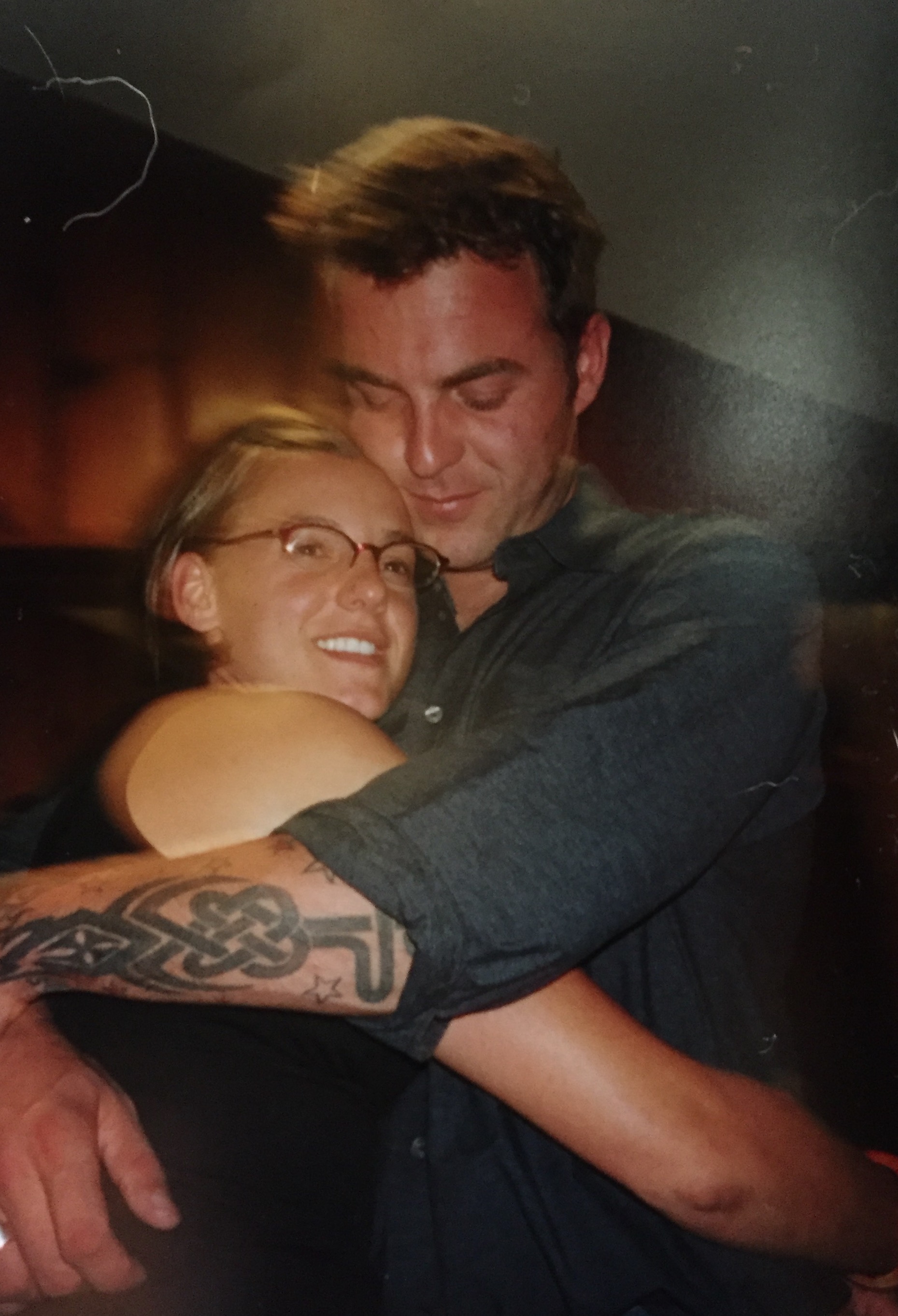
john-andy-eddie-with-pipes

In memory of my beloved husband John Kelly Snyder… 20 Sept 1956 – 21 Oct 2016.

The Warrior Project is a warm, welcoming drop-in center for those living with extreme emotional and/or physical pain coupled with hopelessness, and a resource for families and friends fearing for the life of, or grieving the loss of, the person they love so much.

My Johnny was a true warrior, fighting demons no one else could see.  I thought he was the strongest man in the world, and perhaps he was, but tragically, the demons got the better of him.

The name of this project is in no way intended to be reflective of, or piggy back off, Wounded Warriors which serves those wounded after September 11, 20o1.  Like too many others, John was a warrior long before then.

Fair winds and following seas, Husband.
Posted in Grief | Tagged , , , , , , , , | 4 Comments